Tag: Stirling Business Directory

Stirling Bridge

Stirling Bridge

Spanning the River Forth near the city of Stirling, Stirling Bridge is far more than a crossing — it is a symbol of Scottish resilience, courage, and national identity. Immortalised in history as the site of the Battle of Stirling Bridge (1297), where William Wallace and Andrew Moray achieved a stunning victory over English forces, the bridge and its surroundings remain one of the most significant historic locations in Scotland. Today, it stands as a poignant reminder of Scotland’s struggle for independence and the enduring spirit of its people.


A Bridge at the Heart of Scotland

Stirling’s position has always been one of immense strategic importance. The River Forth winds its way across central Scotland, creating a natural barrier between the Highlands and Lowlands. For centuries, Stirling was the lowest fixed crossing point on the river, making it a vital link for trade, travel, and military movement. Whoever controlled Stirling Bridge effectively controlled the route north and south through the country.

By the late 13th century, as Scotland became embroiled in the Wars of Independence, this crossing gained enormous military significance. The stone and timber bridge that stood here in 1297 was narrow — only wide enough for two horsemen to pass side by side — and it would soon become the stage for one of the most famous battles in Scottish history.


The Battle of Stirling Bridge (11 September 1297)

Following the death of Alexander III and the political instability that ensued, Scotland found itself under increasing English control. In 1296, King Edward I of England invaded and claimed overlordship of Scotland, sparking widespread rebellion. Among the resistance leaders were William Wallace, a knight of humble origins, and Andrew Moray, a nobleman from the north.

By the summer of 1297, Wallace and Moray had already achieved several local victories and gathered a substantial force of Scottish soldiers. The English army, led by John de Warenne, Earl of Surrey, and Hugh de Cressingham, the English treasurer in Scotland, marched north to crush the uprising.

When the two armies met at Stirling, the English force outnumbered the Scots — estimates suggest over 8,000 English soldiers, including 3,000 heavy cavalry, against roughly 2,000–3,000 Scots. However, the Scots held the advantage of terrain and strategy.

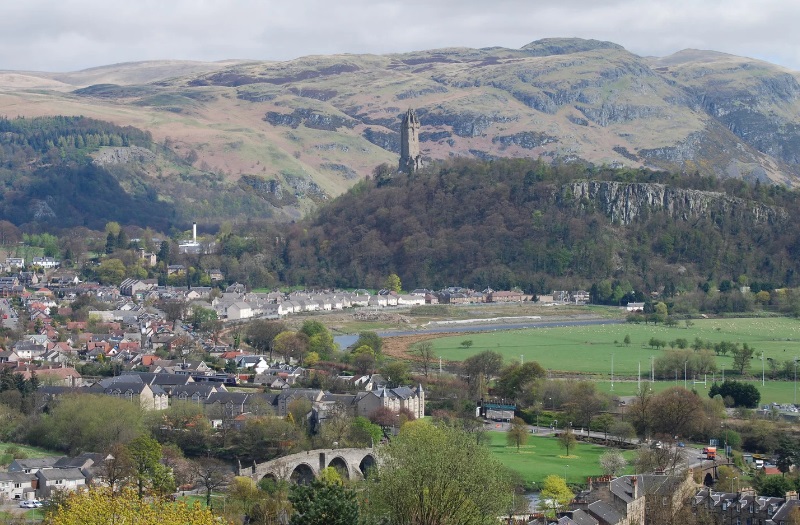
Wallace and Moray positioned their troops on high ground north of the River Forth, near the Abbey Craig — the hill that now hosts the Wallace Monument. The English army camped on the opposite side of the river, intending to cross the narrow bridge and engage the Scots.

What followed was a masterstroke of tactical genius. As the English began crossing the bridge in small numbers, the Scots waited patiently. When enough English soldiers had crossed to form a manageable target — but before they could form an effective battle line — Wallace and Moray launched their attack.

Charging down from the high ground, the Scots cut off the English advance by seizing control of the bridge, trapping part of the army on the northern side. With no room to manoeuvre and no reinforcements able to cross, the English troops were slaughtered or forced into the river, where many drowned.

Among the dead was Hugh de Cressingham, whose death became infamous in Scottish folklore. According to legend, parts of his skin were flayed and used to make sword belts — a gruesome but symbolic act of retribution. The Battle of Stirling Bridge ended with a decisive Scottish victory and sent shockwaves through England. It was a defining moment that proved Scotland’s resistance was far from crushed.

Stirling Bridge Scotland view

Aftermath and Historical Impact

The victory at Stirling Bridge transformed William Wallace into a national hero and strengthened the cause of Scottish independence. Wallace and Moray were soon declared Guardians of Scotland, ruling in the name of the exiled King John Balliol. Unfortunately, Andrew Moray was mortally wounded during the battle and died shortly afterward, but his leadership and tactical insight were instrumental in the triumph.

The battle did not end the conflict — Edward I returned with overwhelming force the following year and defeated Wallace at Falkirk (1298) — but Stirling Bridge had demonstrated that strategy, terrain, and determination could overcome superior numbers. It became a symbol of defiance and unity for generations to come.


The Bridge Through the Ages

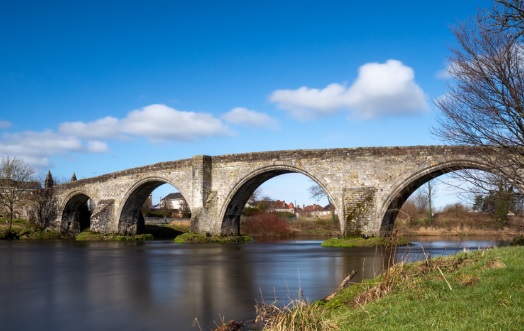
The original wooden bridge from 1297 no longer exists, but archaeological research has identified its approximate location — a short distance upstream from the current Old Stirling Bridge. The existing stone structure, built in the late 15th or early 16th century, is itself a remarkable piece of medieval engineering. Constructed with two graceful arches of stone, it served as Stirling’s main crossing for centuries and remains an evocative landmark.

In 1745, during the Jacobite Rising, part of the bridge was destroyed by government troops to slow the advance of Bonnie Prince Charlie’s forces. The damaged section was later repaired, and today the bridge is preserved as a scheduled monument, pedestrianised and open for visitors to walk across — tracing the steps of history.


Legacy and Commemoration

The legacy of Stirling Bridge endures not only in stone but in Scottish identity itself. The site continues to attract historians, tourists, and patriots from across the world. The nearby National Wallace Monument, erected in 1869, stands as a towering tribute to Scotland’s national hero and offers sweeping views of the battlefield.

Annual reenactments and educational programs ensure that the story of Wallace, Moray, and the Battle of Stirling Bridge remains alive for future generations. The area around the bridge is part of a heritage landscape that also includes Stirling Castle and Bannockburn, creating a powerful trilogy of sites that together tell the story of Scotland’s fight for freedom.


Stirling Bridge is more than a crossing over the River Forth — it is a symbol of resistance, ingenuity, and national pride. The events of 11 September 1297 forever changed the course of Scottish history, proving that courage and clever strategy could triumph over brute force. Standing on the Old Stirling Bridge today, one can still imagine the roar of battle and the echo of freedom that began there — a legacy that continues to define the spirit of Scotland.

In Stirling Business Directory Logo

In Stirling Business Directory

In Stirling Business Directory

For small and medium-sized enterprises (SMEs), visibility is everything. Whether a business offers professional services, retail products, trades, or hospitality, being easily discoverable by potential customers can make the difference between steady growth and stagnation. In a digitally driven marketplace, businesses that connect locally often outperform those that rely solely on national or global platforms. This is precisely where the In Stirling Business Directory becomes an invaluable tool. Designed to showcase businesses within Stirling and the surrounding areas, the directory provides a dedicated space for local enterprises to increase their online presence, attract customers, and strengthen their position in the community.

1. Strengthening Local Visibility

One of the greatest challenges small and medium-sized businesses face is standing out in search results dominated by national chains and large corporations. Online directories such as In Stirling help level the playing field. When a business adds its listing, it immediately becomes part of a curated network of local companies that residents and visitors use when searching for goods or services in Stirling.

By appearing in the directory, SMEs can ensure that when someone searches for “plumbers in Stirling,” “cafés near me,” or “marketing agencies in Stirling,” their company has a much higher chance of being found. The directory provides search-engine-optimised (SEO) listings that feed directly into Google’s local search results, improving online visibility without the need for expensive digital marketing campaigns.

2. Building Trust and Credibility

Local consumers often prefer to support businesses they can trust and engage with directly. Being listed in a reputable local directory like In Stirling signals that a business is legitimate, active, and invested in the community. Each listing can include essential details such as company name, contact information, business description, and links to websites or social media. When potential customers can easily verify who you are and what you offer, it increases confidence in your brand.

Moreover, a directory that specifically highlights businesses in Stirling carries a sense of authenticity and community endorsement. Customers browsing In Stirling are actively seeking local options — meaning the audience is already primed to engage with nearby businesses rather than distant competitors.

Join the In Stirling Business Directory

3. Boosting Search Engine Optimisation (SEO)

For many SMEs, improving search rankings is an ongoing struggle. A listing in In Stirling can make a measurable difference. Search engines such as Google place strong value on backlinks from credible, geographically relevant websites. When a business gains a link from a trusted local directory, it can help boost its overall search performance.

This means that in addition to being discoverable within the directory itself, your company website may also rise in organic search rankings. The more complete and consistent your business information is across online platforms, the more likely you are to appear in local search packs — the boxed lists of nearby businesses that appear at the top of search results. For a small company, that kind of exposure is invaluable.

4. Reaching Both Locals and Visitors

Stirling attracts not only residents but also tourists, students, and professionals passing through the area. Many of these individuals rely on local directories to find places to eat, shop, or hire services. Having your company listed in In Stirling means your business is visible to both local customers and visitors exploring the region.

This dual audience can open up new revenue streams. For example, a small café might attract local regulars during the week while benefiting from weekend visitors looking for “best cafés in Stirling.” A directory listing ensures that your business is visible to both audiences at exactly the moment they’re searching.

5. Affordable Marketing with Long-Term Benefits

Marketing budgets for SMEs are often tight. Paid advertising, print media, and social campaigns can quickly become costly, and their effects may be short-lived. A listing in In Stirling offers a cost-effective, long-term marketing solution. Once your profile is created, it continues to work for you around the clock, providing ongoing exposure without recurring ad spend.

The return on investment is particularly strong for small firms that may not have the time or resources to maintain complex digital campaigns. With a well-optimised directory profile — complete with a business description, contact links, and imagery — you can create a steady stream of inbound inquiries that cost little to maintain.

6. Networking and Collaboration Opportunities

Beyond attracting customers, In Stirling functions as a hub for local business connections. By being part of a shared directory, companies can more easily discover one another and form collaborations. A photographer may find a partnership opportunity with a local wedding venue; a graphic designer might connect with nearby printers or marketing agencies.

These connections not only drive referrals but also strengthen Stirling’s wider business ecosystem. In this way, the directory supports a sense of community and mutual growth — something large national platforms rarely achieve.

7. Supporting the Local Economy

Choosing to list your business in In Stirling also demonstrates a commitment to the local economy. The more local businesses that engage with the platform, the stronger the collective visibility of Stirling’s commercial landscape becomes. Consumers who use the directory are more likely to keep their spending local, which in turn helps create jobs, foster entrepreneurship, and sustain the area’s economic resilience.

8. Ease of Use and Ongoing Updates

The In Stirling Business Directory is designed to be user-friendly, allowing business owners to update their information easily. Whether you’re adding new services, updating your opening hours, or uploading images, you remain in full control of how your business is presented. This flexibility ensures that your listing remains accurate and relevant as your company grows or evolves.


For small and medium-sized businesses in Stirling, adding a listing to the In Stirling Business Directory is a strategic move with far-reaching benefits. It enhances visibility, builds credibility, improves SEO performance, and connects businesses with both local and visiting customers. More importantly, it contributes to a thriving local economy where enterprises can support and promote one another.

In an age where online presence is critical, In Stirling offers SMEs an accessible, affordable, and community-focused way to stand out. A single listing can open the door to countless opportunities — new customers, new partnerships, and a stronger foothold in Stirling’s growing business network.